Cloud-based Engineering
Simulation Software
Optimized for
Efficiency
Pmass provides engineers and researchers a powerful simulation tool based on the peridynamics theory.
Start Simulation for Free
Online Structural Analysis

Easy to Use
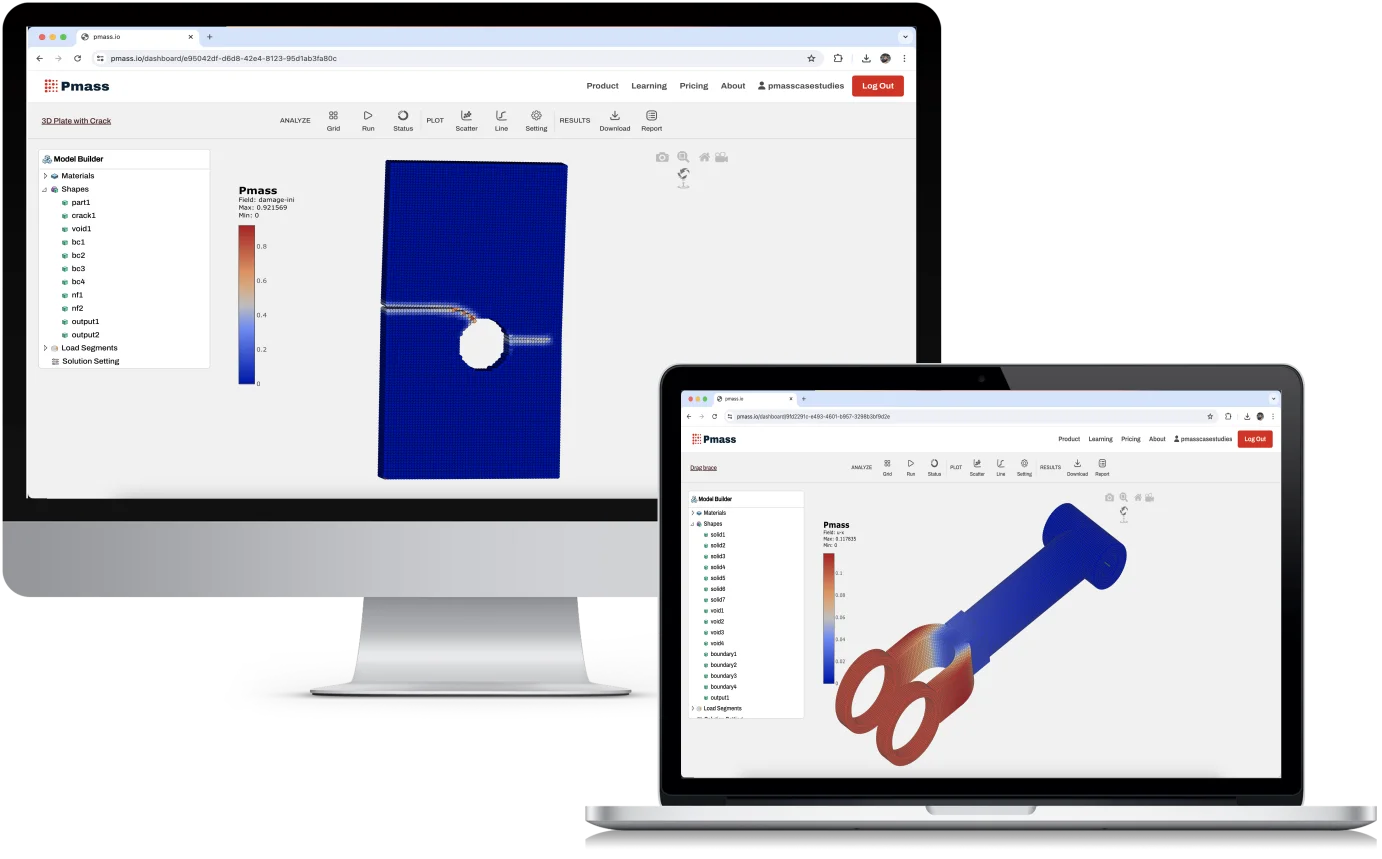
- Easily create 2D/3D models online using embedded Model Builder, or import a CAD model or FE mesh.
- Discretize using Grid Generator, and solve in the cloud.

100% Online
- Access from any device in any location.
- A standard web browser and an internet connection are all you need!
- No software installation, no hardware infrastructure.

Flexible Collaboration
- Share your analysis with others.
- Work together with your teammates and partners.
- Set access permission level.

Stay Updated
- All software updates are automated.
- Use the latest version always.
- Choose your plan based on your requirements.
Why Pmass?
NOSB-PD
Pmass is built on the most general form of peridynamics, non-ordinary state-based peridynamics (NOSB-PD).
Classical constitutive and damage models
Pmass allows the use of constitutive and damage models from the classical mechanics theory.
Unified Formulation
The peridynamic equation of motion holds true anywhere in a rigid body, despite the presence of cracks and other discontinuities.
Heterogeneous Materials
Pmass allows consideration of highly heterogeneous material constituents and highly complex cracking mechanism.
Complex Material and Cracking Mechanism
Material damage is an inherent feature in Pmass, thus modeling of fracture initiation and propagation, with arbitrary paths, i.e., is permitted without the need for a crack growth treatment.
How it works?
Model Builder
Grid Generator
Run Simulation
Post Processing
Model Builder
Pmass supports three methods for creating models for peridynamic analysis: using the built-in Model Builder, importing a CAD model, or importing a finite element (FE) model. The embedded Model Builder allows for the creation of 2D and 3D geometries and the incorporation of voids, cracks, and inclusions within models. Additionally, Pmass streamlines 3D modeling by enabling the direct upload of STL files, a widely used format in 3D printing and CAD. This cloud-based platform enhances stress and failure analyses, improving design accuracy and reliability. Pmass also allows the importation of node positions and element connectivity from existing FE meshes, supporting various element types for 2D and 3D models.
Learn more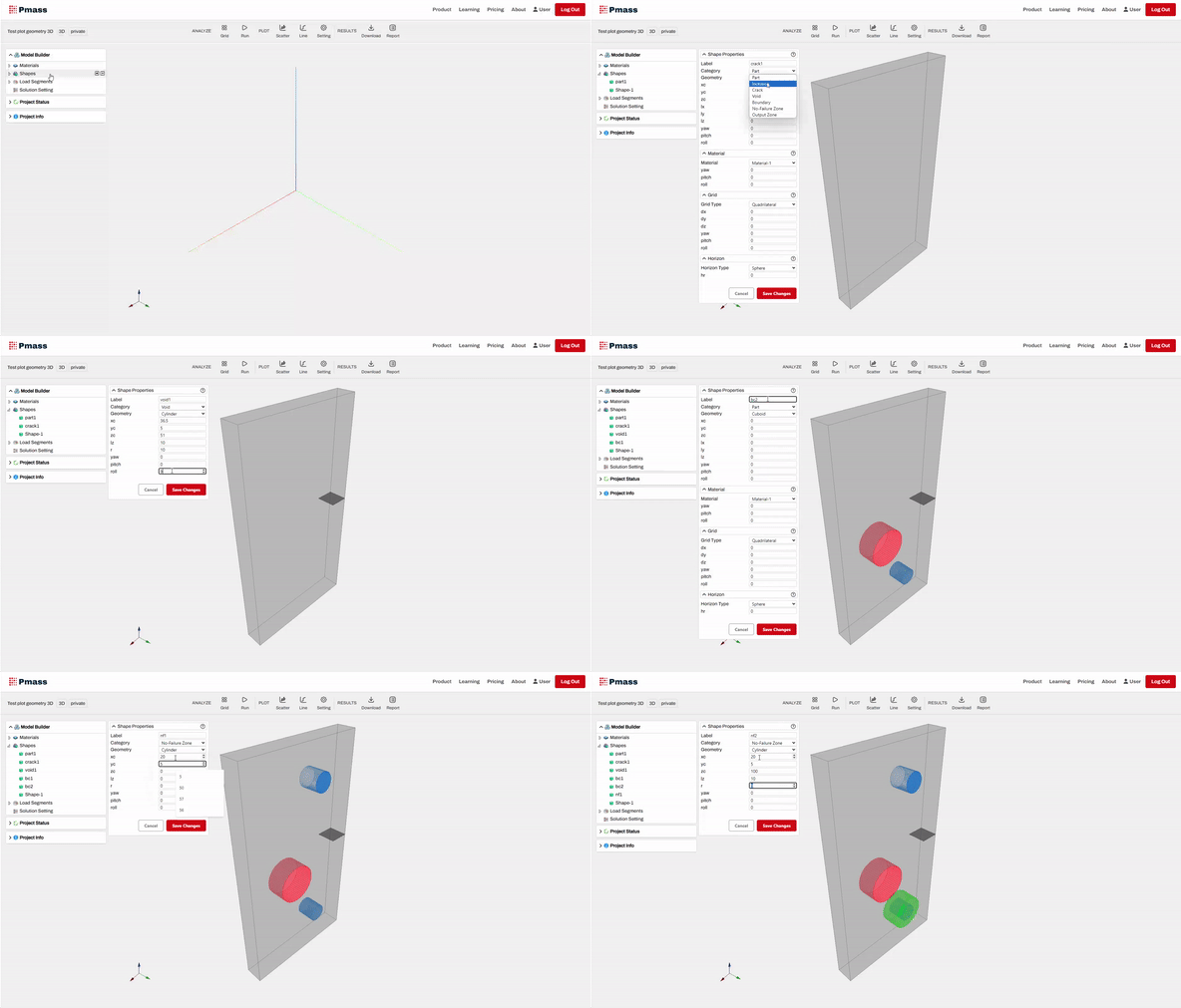
Grid Generator
Pmass' Interactive Grid Generator tool facilitates the discretization of models into peridynamic points. Beyond simply adjusting the spacing between these points, the tool offers various methods of point placement, such as quadrilateral (2D and 3D), circular (2D), spherical (3D), and cylindrical (3D). Additionally, within Pmass, users have the flexibility to express the family of a particular peridynamic point using different available options: rectangle and circle for 2D models; and cuboid, sphere and cylinder for 3D models.
Learn more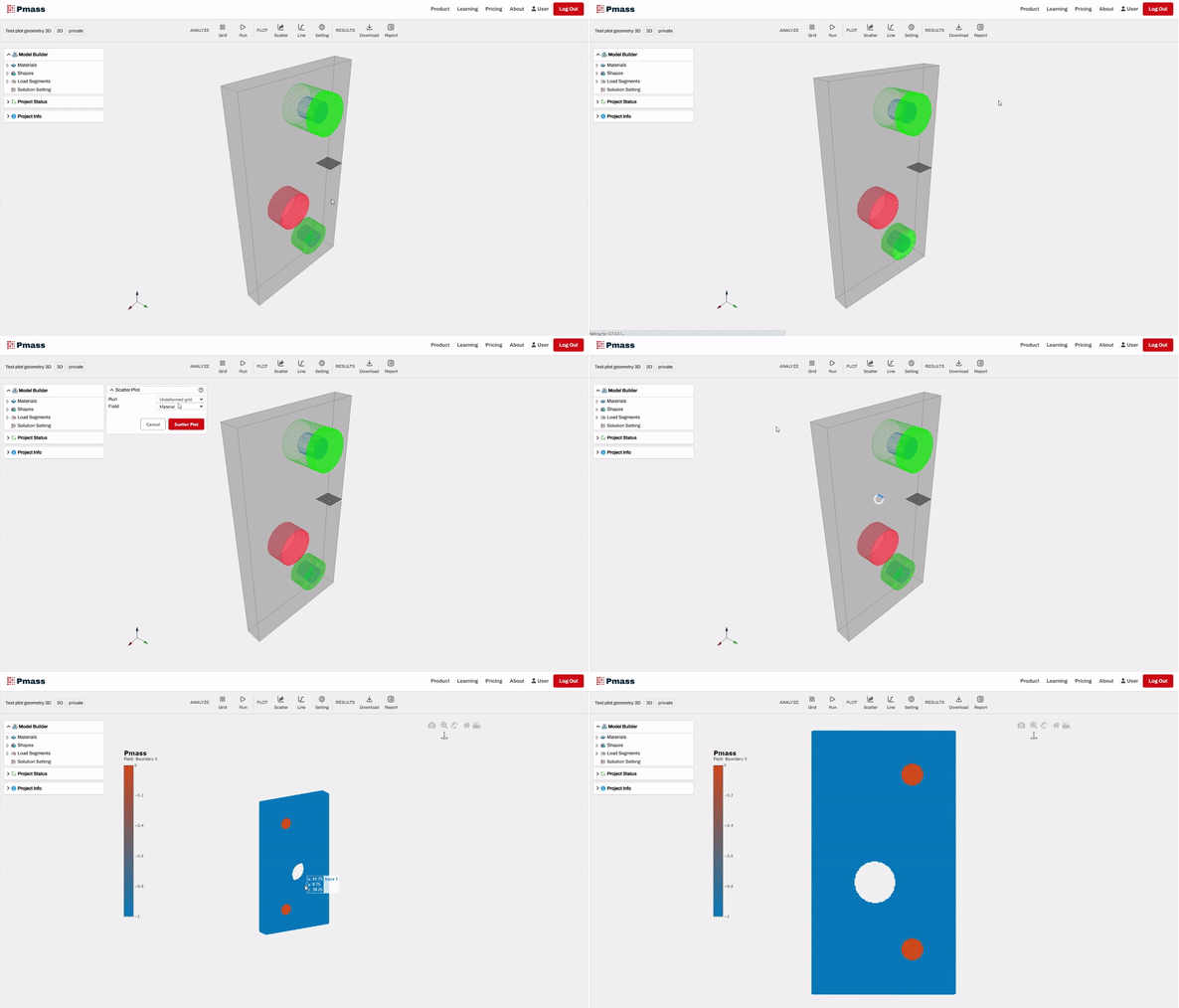
Run Simulation
Pmass is fully implemented on the cloud, leveraging high-performance computing for rapid analysis and efficient resource utilization. This allows users to obtain accurate results much faster than traditional methods. Cloud computing offers cost-effectiveness, ease of maintenance, flexibility, and scalability, making it ideal for peridynamic analysis. Pmass takes advantage of these benefits to enable efficient modeling of fracture initiation and propagation without the need for specialized crack growth treatments.
Learn more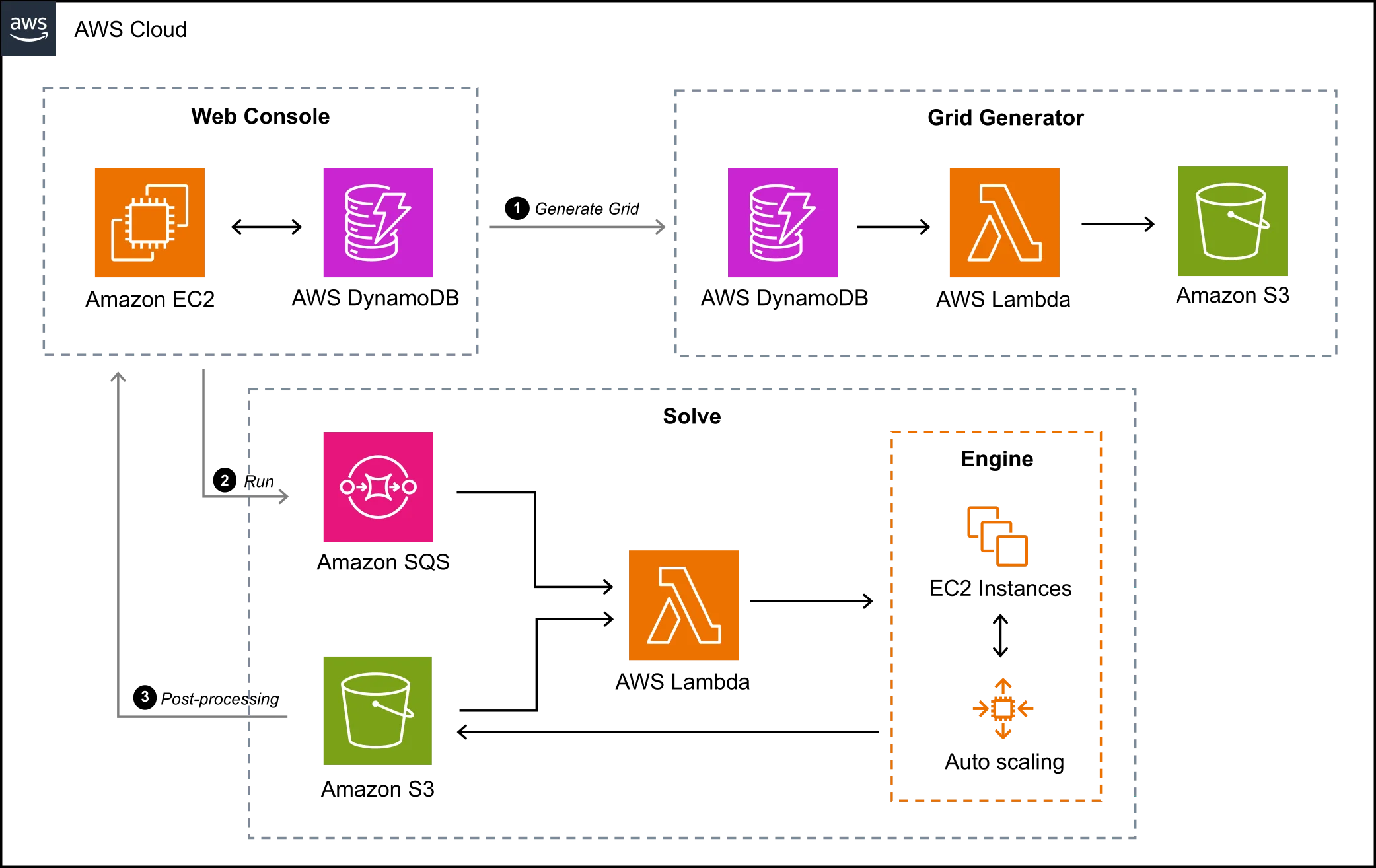
Post Processing
Pmass offers real-time visualization of stress and failure analysis results, allowing engineers to explore 2D and 3D models, inspect crack paths, and analyze critical areas interactively. Customizable reporting features enable clear communication of findings to stakeholders, clients, and regulatory bodies. The embedded post-processing tool lets users visualize results with scatter and line plots. Simulation results can be downloaded as text files for use with various post-processing tools, and comprehensive analysis reports can be downloaded as PDF files.
Learn more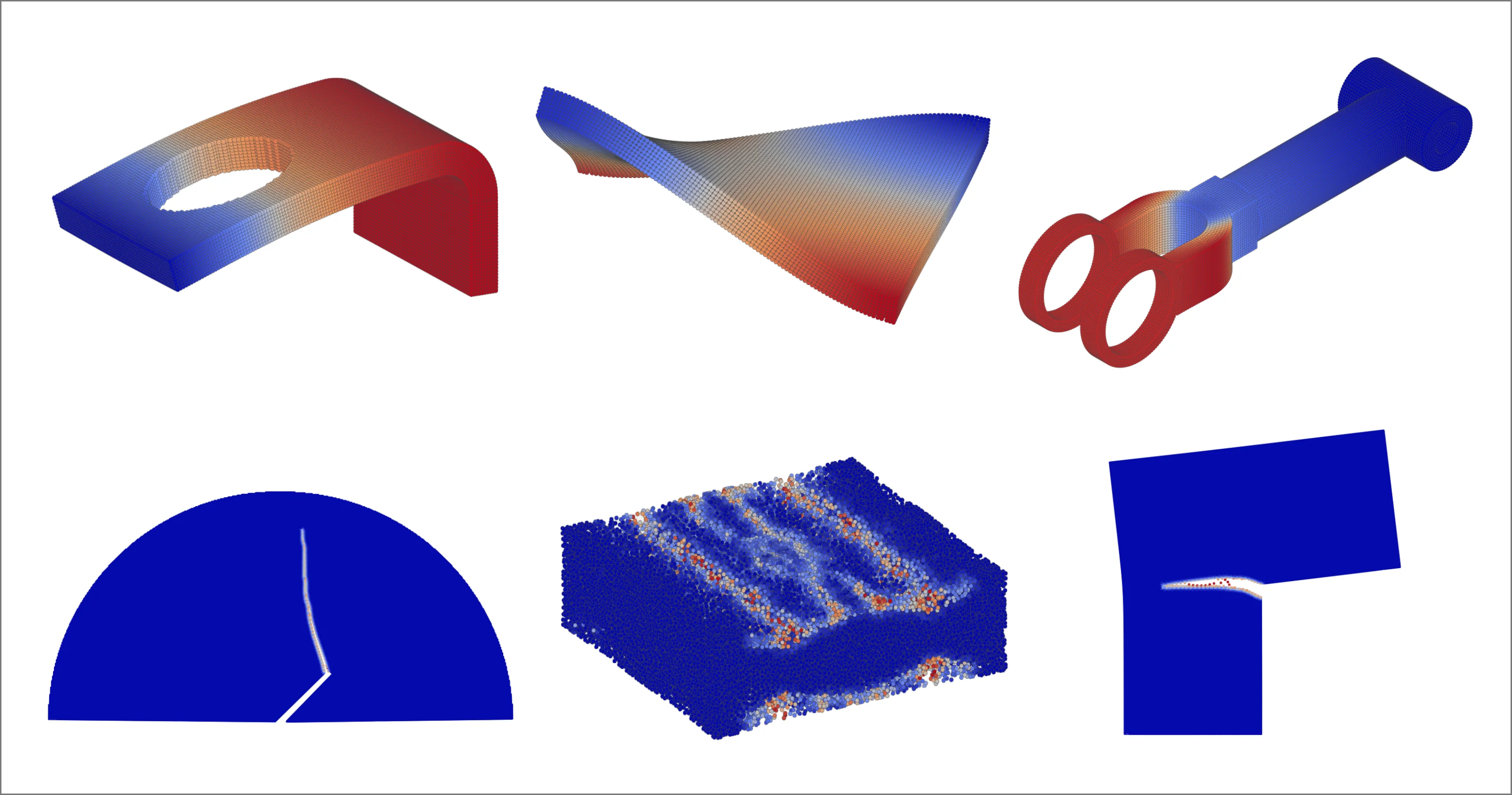
What Pmass Can Solve
Stress Analysis
Fracture Analysis
Composite Materials
Impact Analysis
Topology Optimization
Unit Cell Homogenization
Stress Analysis
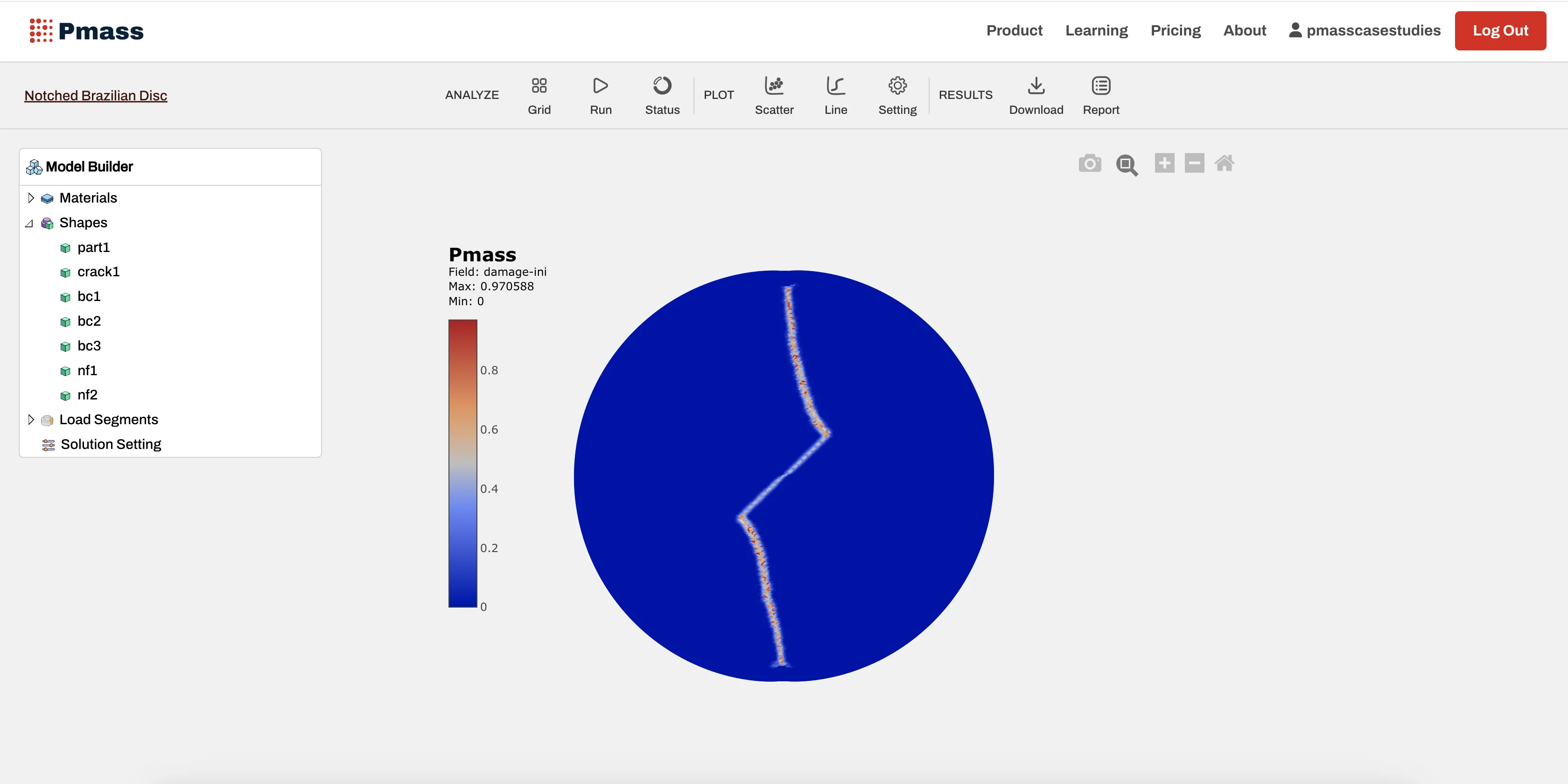
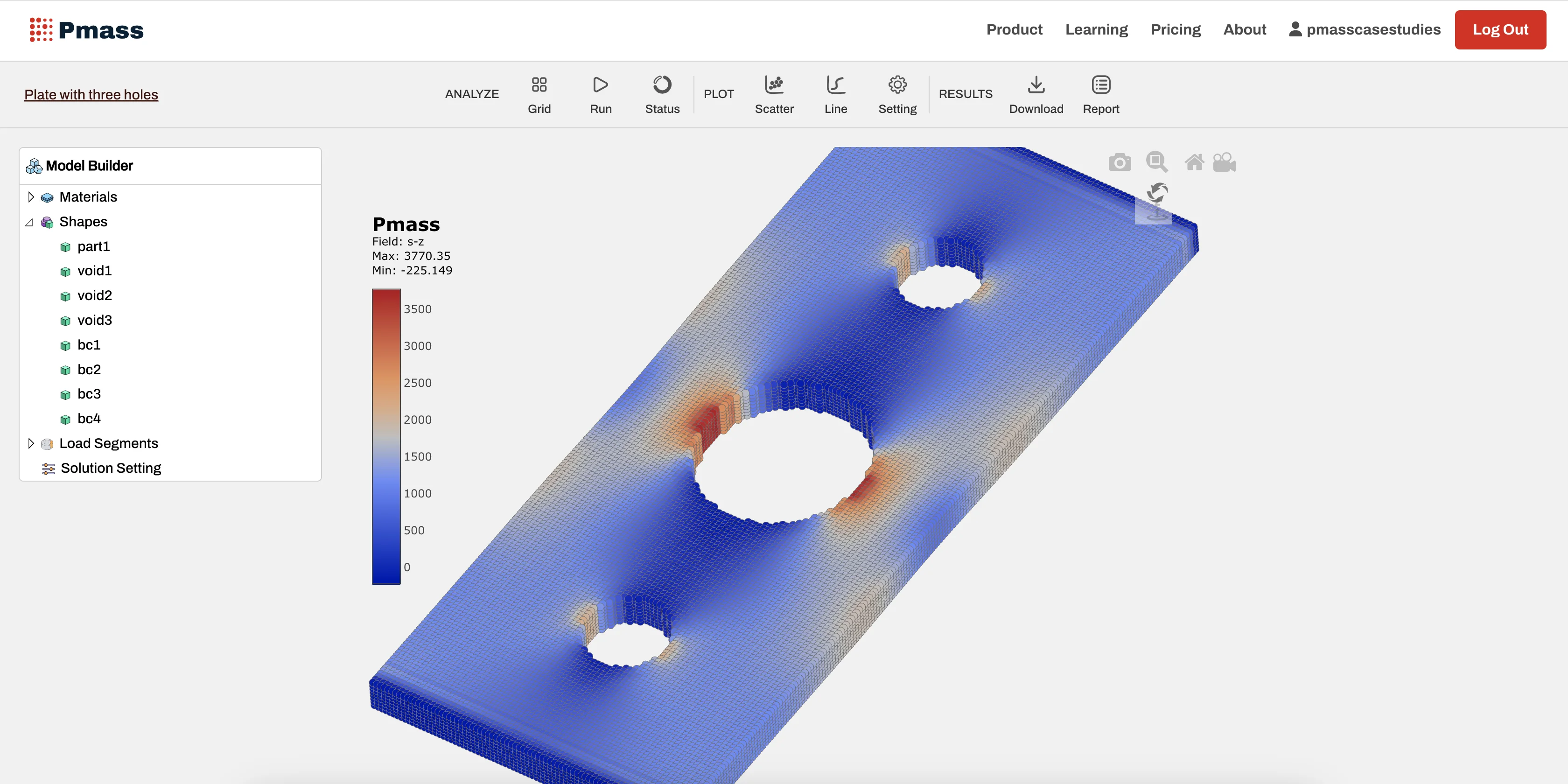
Pmass supports both linear and nonlinear static stress analysis, allowing users to evaluate stress and strain distributions in complex geometries under various loading conditions. Leveraging the nonlocal nature of peridynamics, it accurately captures stress concentrations around notches, holes, and material discontinuities. This makes it a powerful tool for structural integrity assessments and design validation.
Validation Cases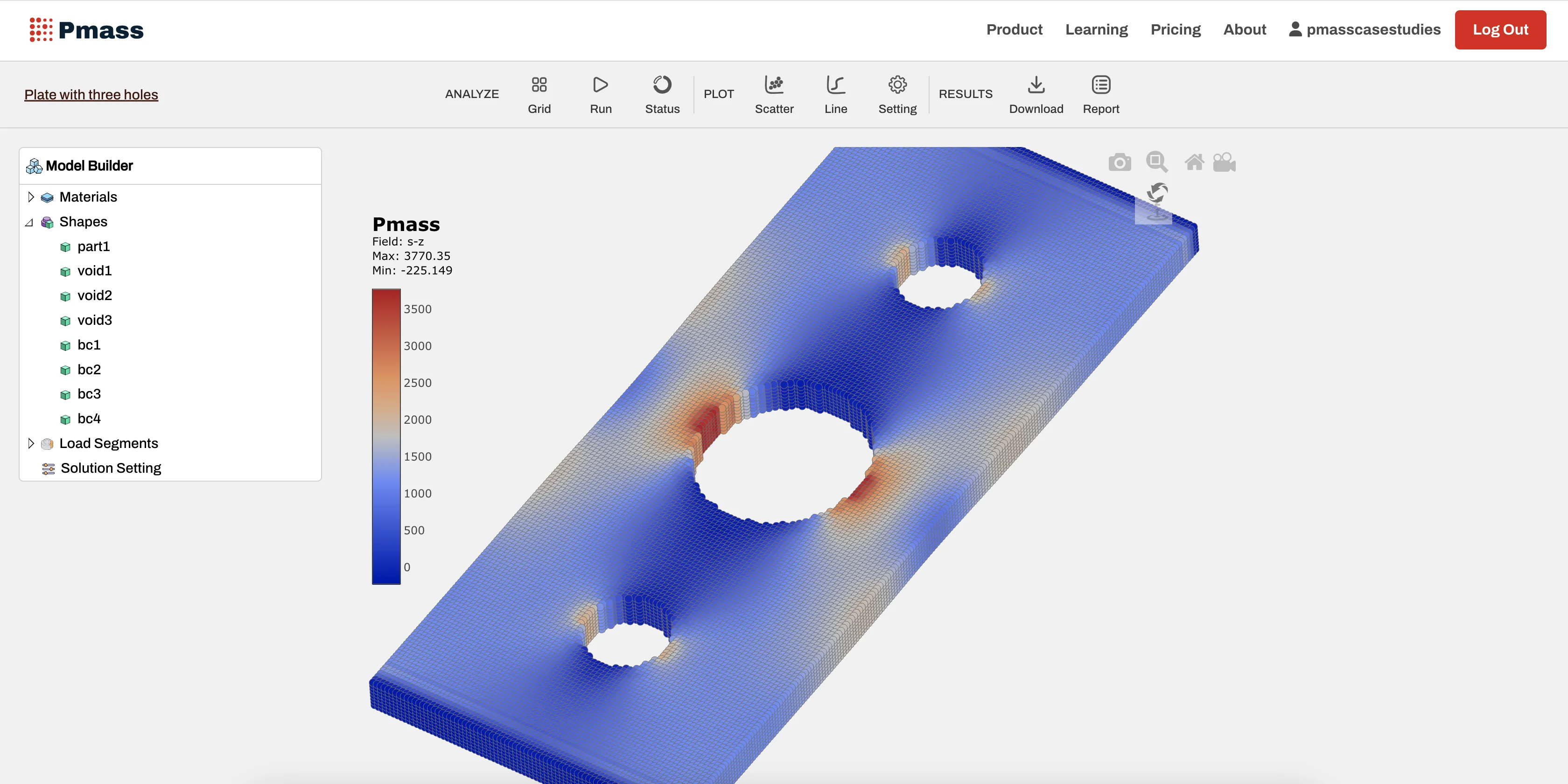
Fracture Analysis
Built on the peridynamic theory, Pmass inherently models material damage and fracture without requiring pre-defined crack paths or special treatments. It simulates crack initiation, propagation, and interaction under both quasi-static and dynamic conditions, including mixed-mode fracture. This enables robust failure analysis of structures subjected to real-world loading scenarios.
Validation Cases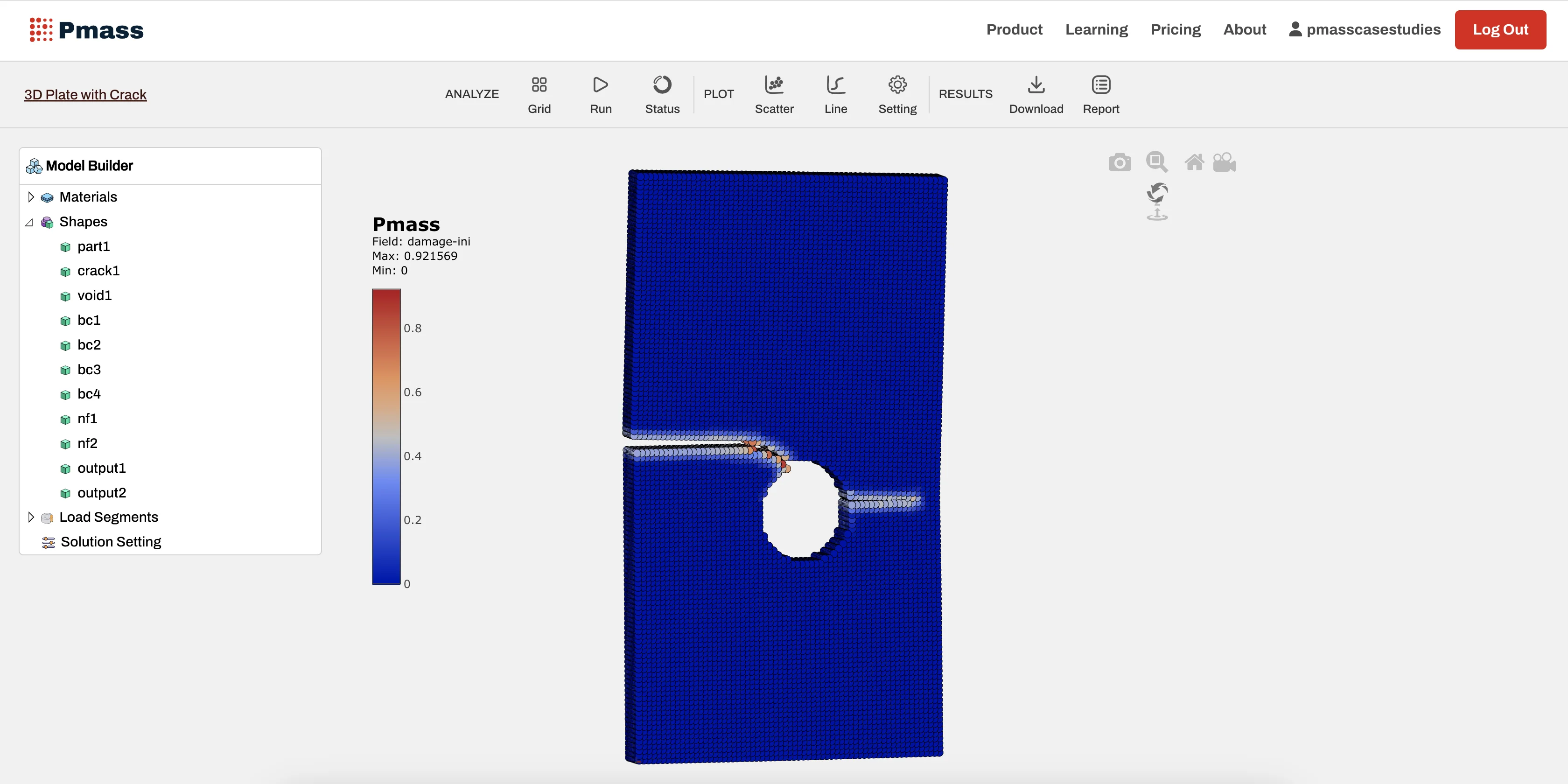
Composite Materials
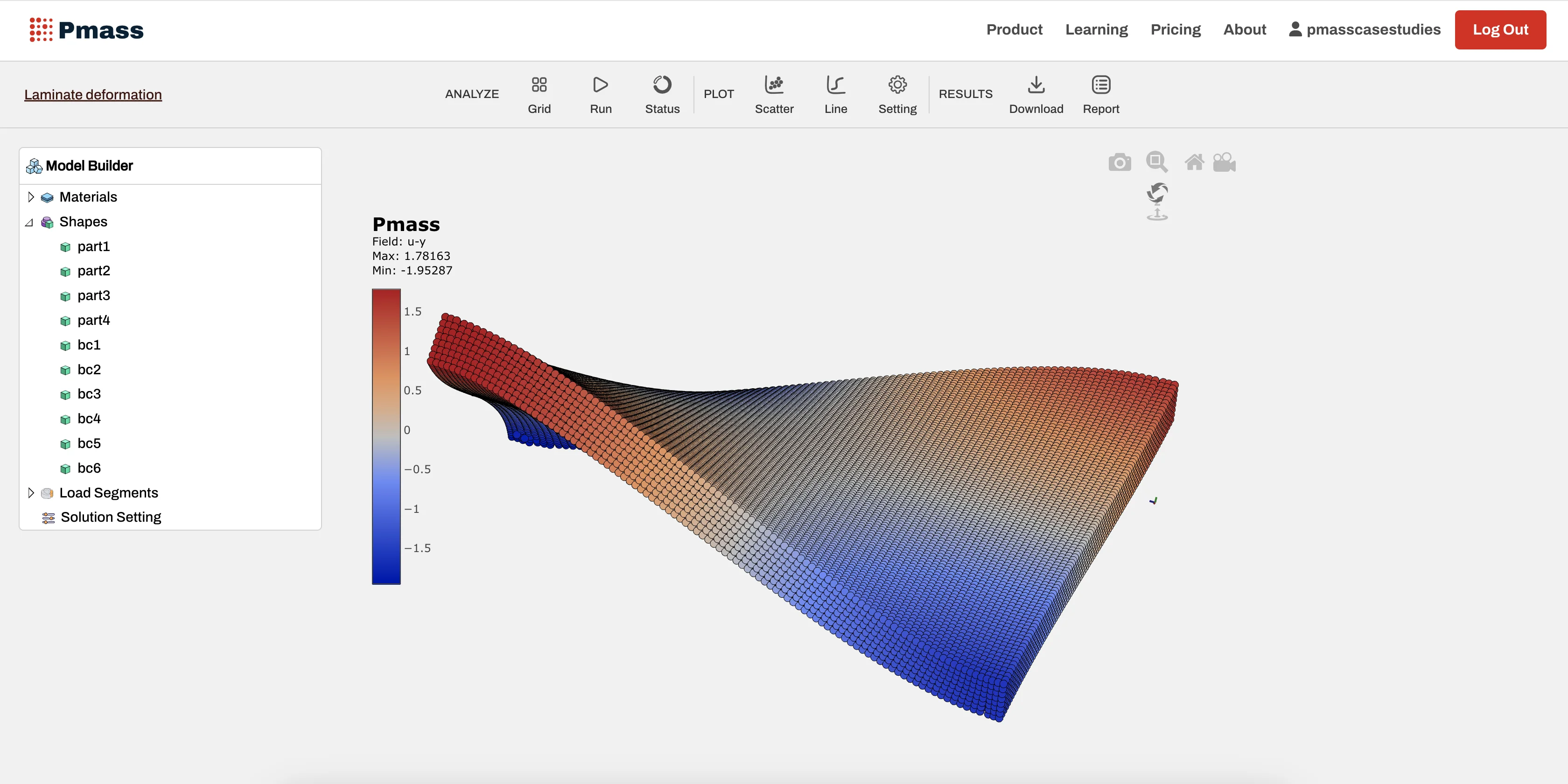
Pmass offers versatile capabilities for simulating a wide range of composite materials. Users can model fiber-reinforced laminates with orthotropic properties or analyze particle-reinforced composites. Advanced failure models, such as the Hashin criteria, are integrated to capture matrix cracking, fiber breakage, and delamination. This flexibility makes Pmass suitable for both aerospace-grade and consumer-level composite systems.
Validation Cases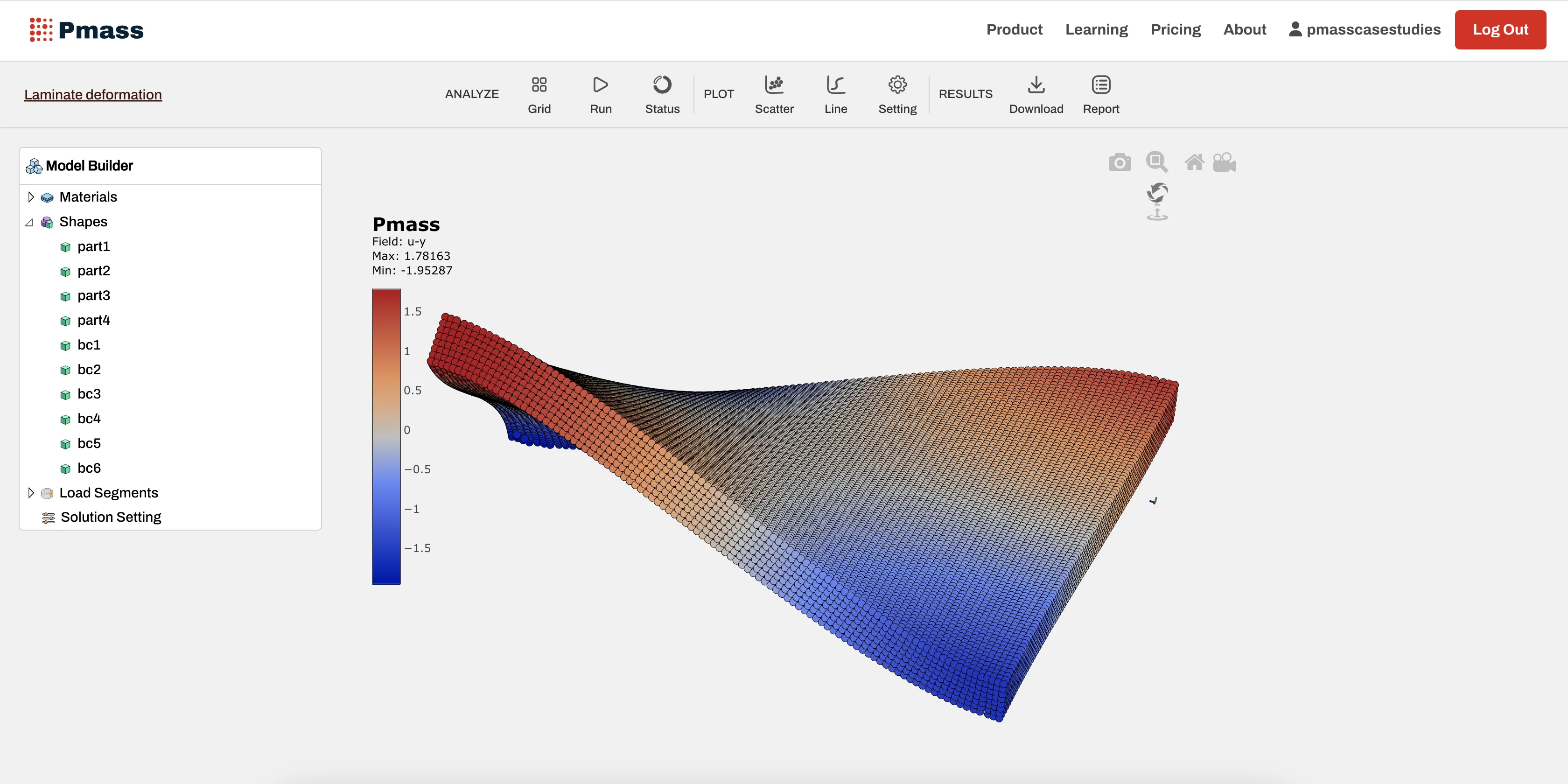
Impact Analysis
With its strong foundation in peridynamics, Pmass excels in simulating high-velocity impacts and dynamic events. It captures damage evolution, wave propagation, and material failure during ballistic impacts or drop tests. Whether you’re evaluating protective structures, crash scenarios, or projectile penetration, Pmass provides accurate insights into impact response and energy dissipation.
Validation Cases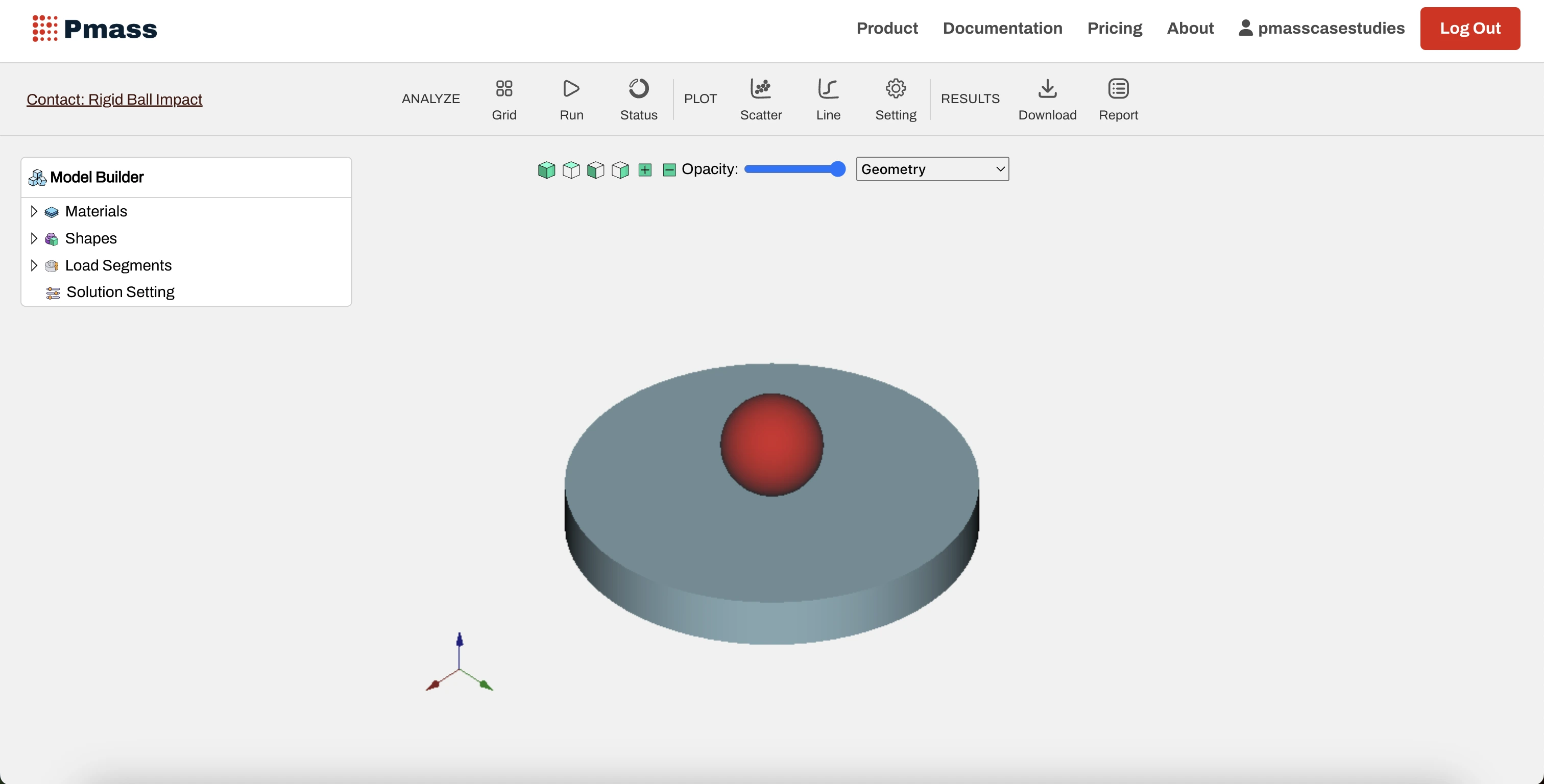
Topology Optimization
Pmass brings a novel approach to topology optimization by incorporating peridynamics to handle discontinuities, voids, and cracks during the optimization process. This allows for the design of robust and lightweight structures that are not only optimized for performance but also resilient to damage and failure. Optimized topologies can be directly used for further fracture analysis within the same simulation workflow.
Validation Cases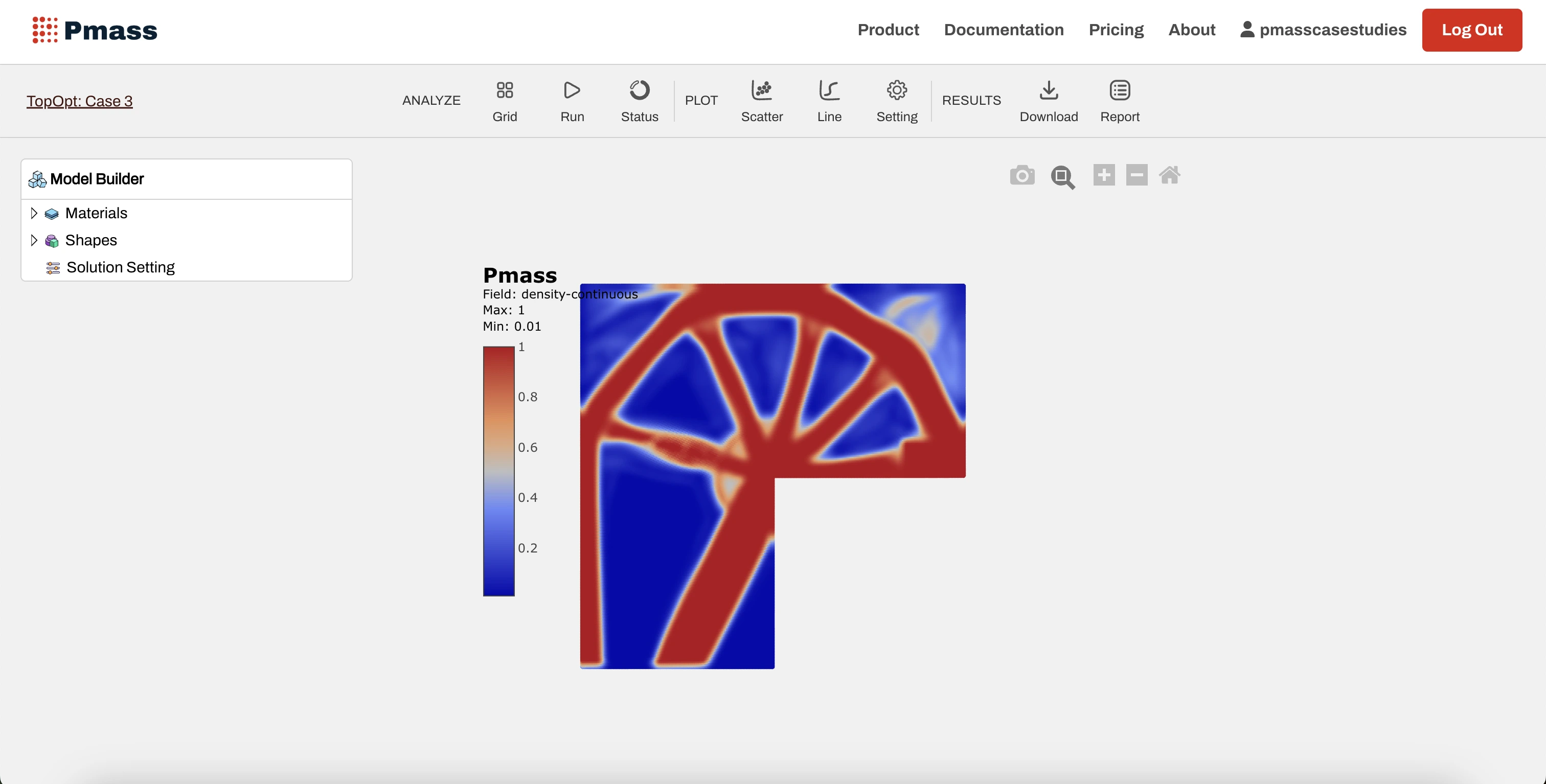
Unit Cell Homogenization
Pmass includes a dedicated tool for homogenizing the effective mechanical properties of microstructured unit cells. This feature is ideal for analyzing periodic lattice materials or composites, especially those with micro-cracks or interface debonding. The output includes a full stiffness matrix and orthotropic properties for use in macroscale simulations, ensuring accurate multiscale modeling of advanced materials.
Validation Cases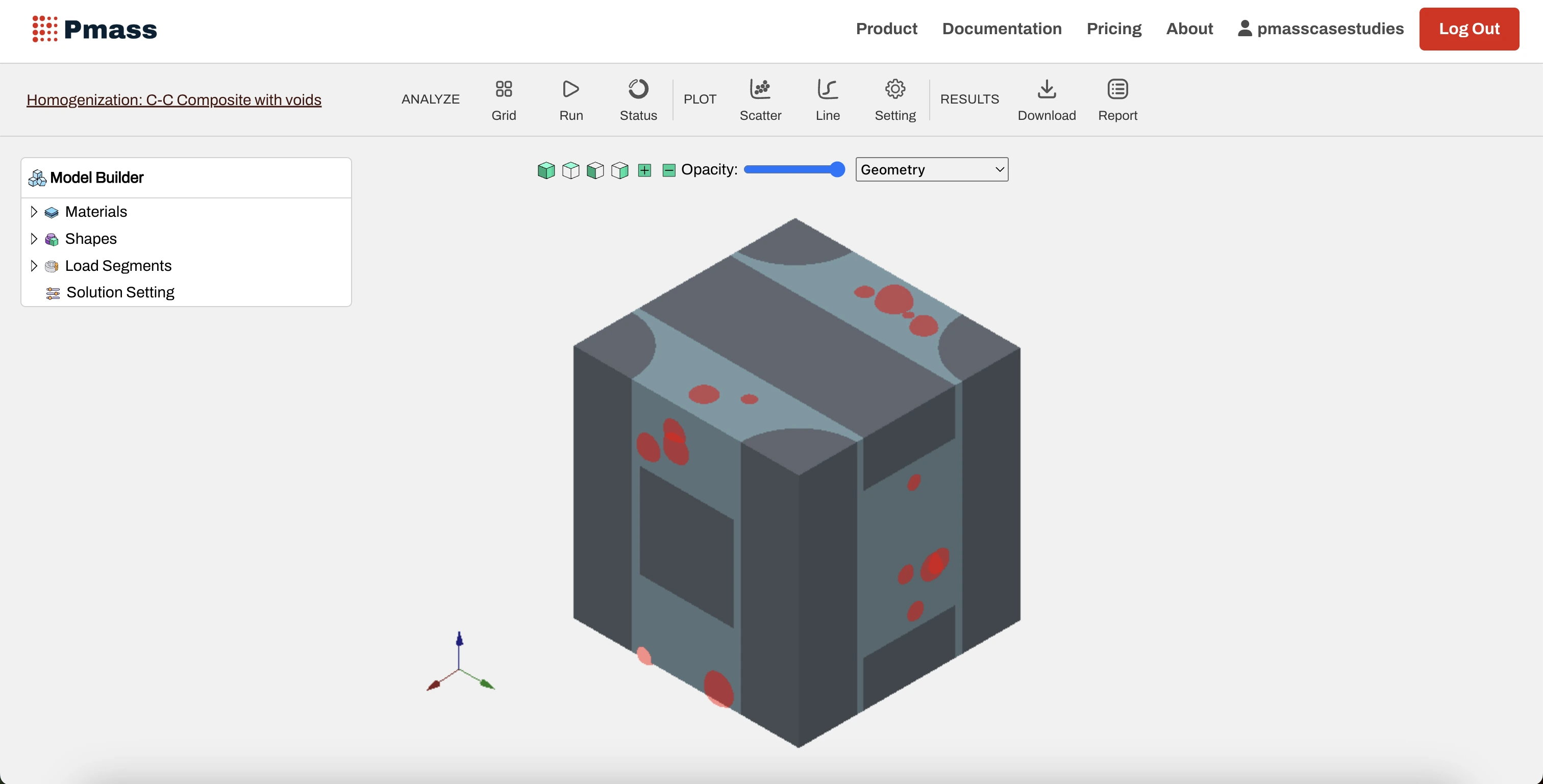
What Pmass Offers Under the Hood
Large Deformation
Rigid Body Contact
Material Models
Quasi-Static Loading
Transient Loading
Hybrid Loading
Large Deformation
Pmass leverages a Semi-Lagrangian peridynamic formulation to accurately simulate large deformations. In this method, the peridynamic family of each point is updated dynamically based on deformation, enabling precise modeling of highly strained materials. This is especially powerful in scenarios involving extreme loading, such as impacts, crashes, or structural collapse. The approach enhances accuracy in predicting material behavior under nonlinear geometry changes and is well-suited for applications in aerospace, automotive, and materials research.
Validation Cases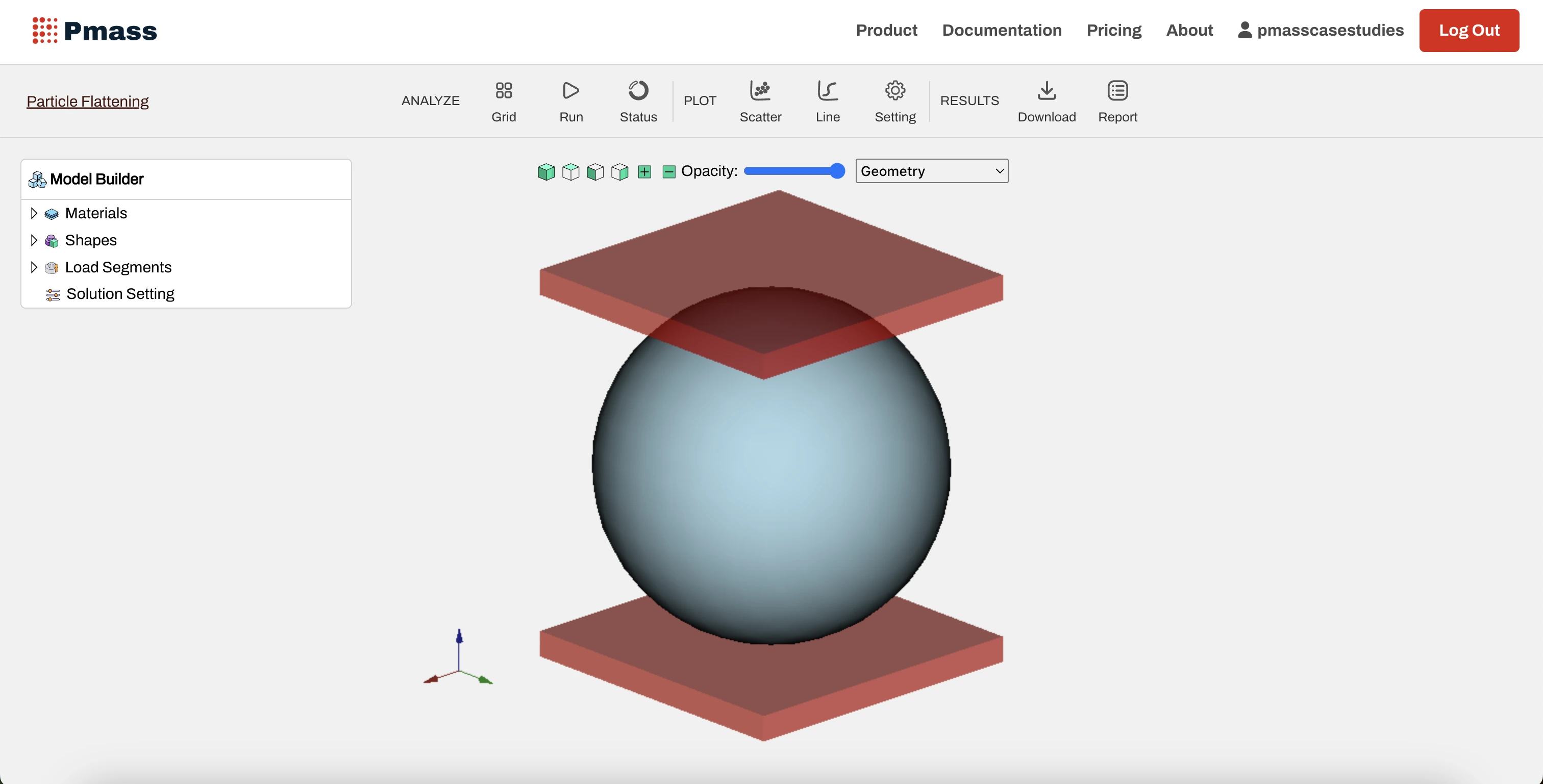
Rigid Body Contact
Pmass includes an efficient rigid body contact module that allows deformable peridynamic domains to interact with rigid geometries. These rigid bodies, defined in various 2D and 3D shapes, are treated as non-deformable to accelerate computations. The feature supports both explicit (for impact simulations) and implicit (for steady-state contact scenarios like forming or compression) solvers. Whether it’s simulating a projectile hitting a panel or a mold pressing a material, Pmass delivers reliable and fast contact simulations with minimal setup.
Validation Cases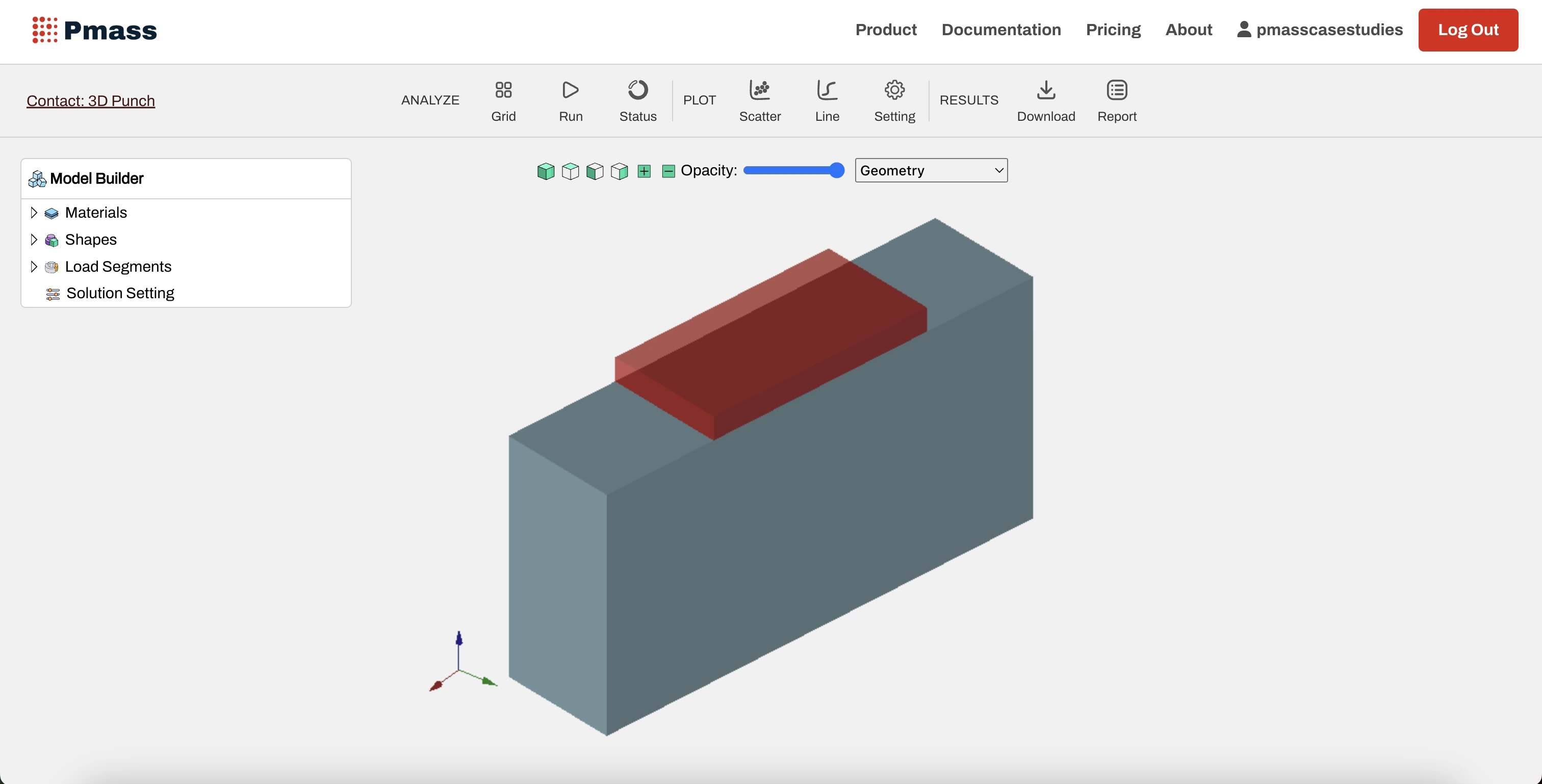
Material Models
Pmass supports a wide spectrum of material behaviors. In addition to classical linear elasticity, users can now simulate nonlinear elastic-plastic deformation using rate-independent plasticity models. The implementation includes isotropic hardening with four standard hardening laws—Linear, Ludwick, Swift, and Voce—solved using an efficient radial return algorithm. These capabilities make it possible to model metals and other complex materials under real-world loading with both explicit and implicit solvers.
Validation Cases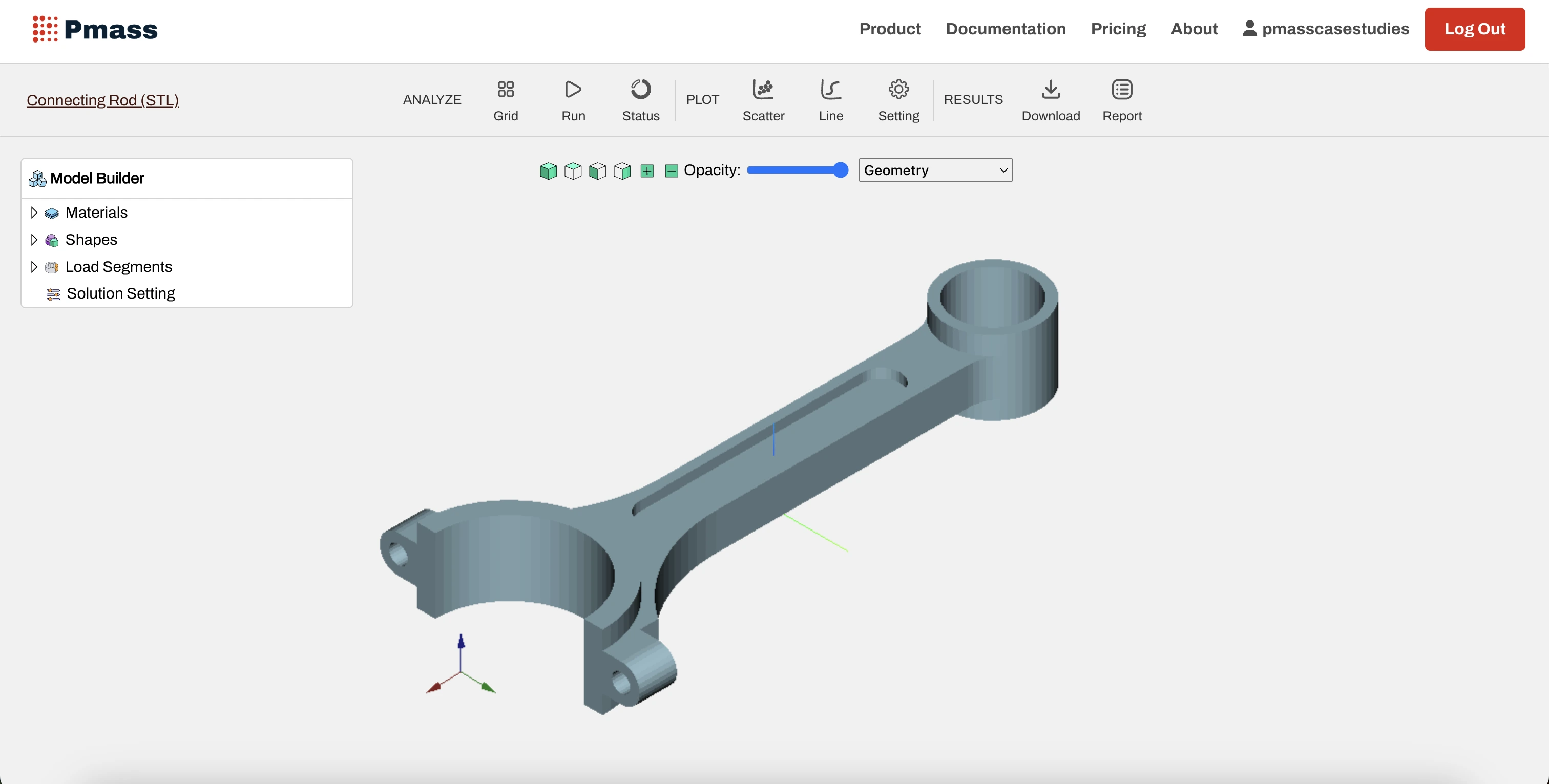
Quasi-Static Loading
For scenarios involving slow or gradually applied loads, Pmass offers quasi-static simulation capabilities. This loading condition is ideal for structural assessments where inertial effects are negligible. Engineers can analyze material behavior up to failure under controlled loading rates, making this approach suitable for reliability analysis, material testing simulations, and structural evaluations in civil, mechanical, and materials engineering.
Validation Cases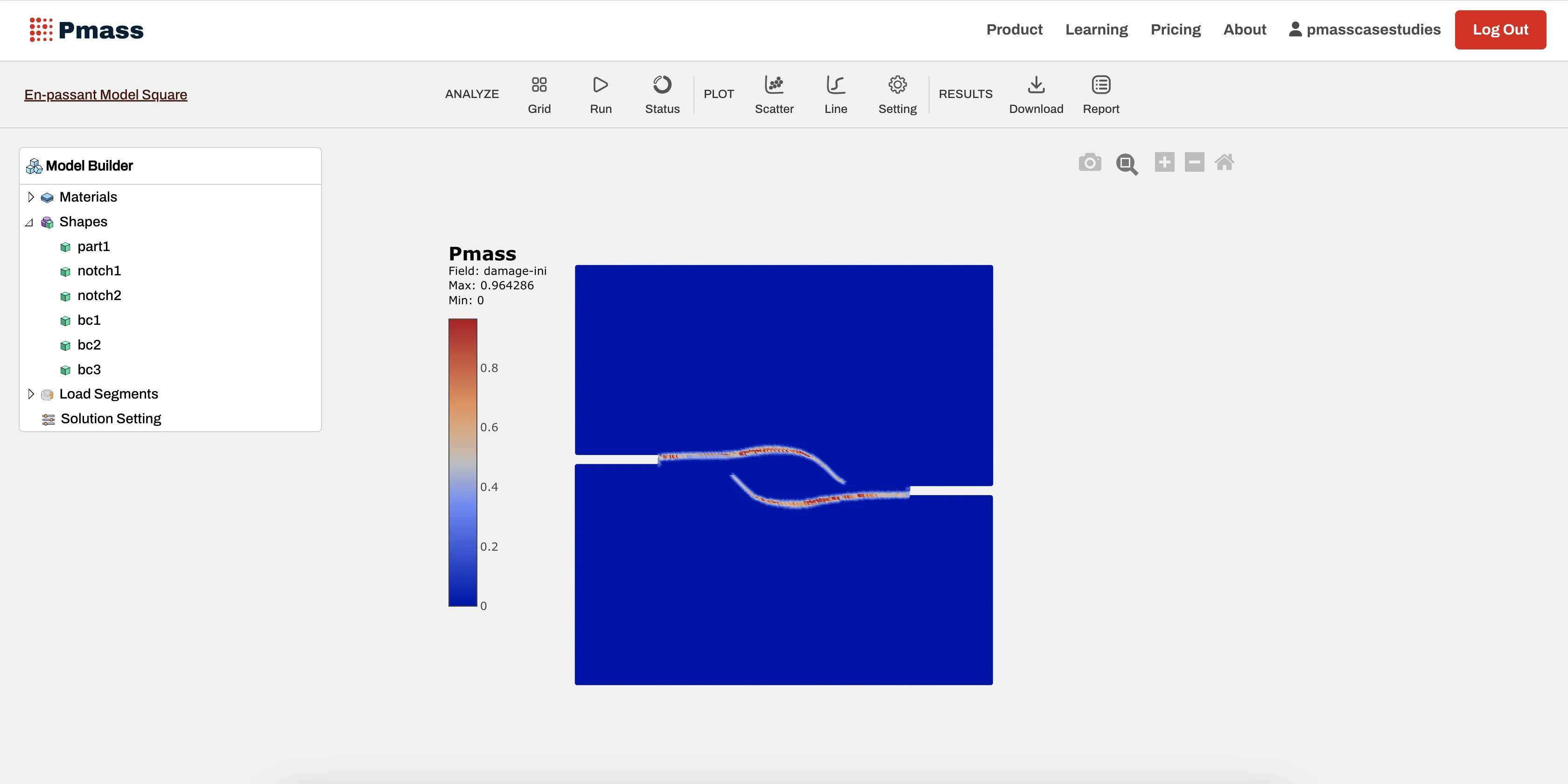
Transient Loading
Pmass excels at simulating dynamic loading conditions where load changes occur over short time intervals. These transient simulations capture inertial effects, wave propagation, and rapid damage evolution, which are critical in high-speed impact, vibration analysis, or crash testing applications. Combined with the peridynamic damage model, Pmass delivers realistic failure predictions under dynamic conditions.
Validation Cases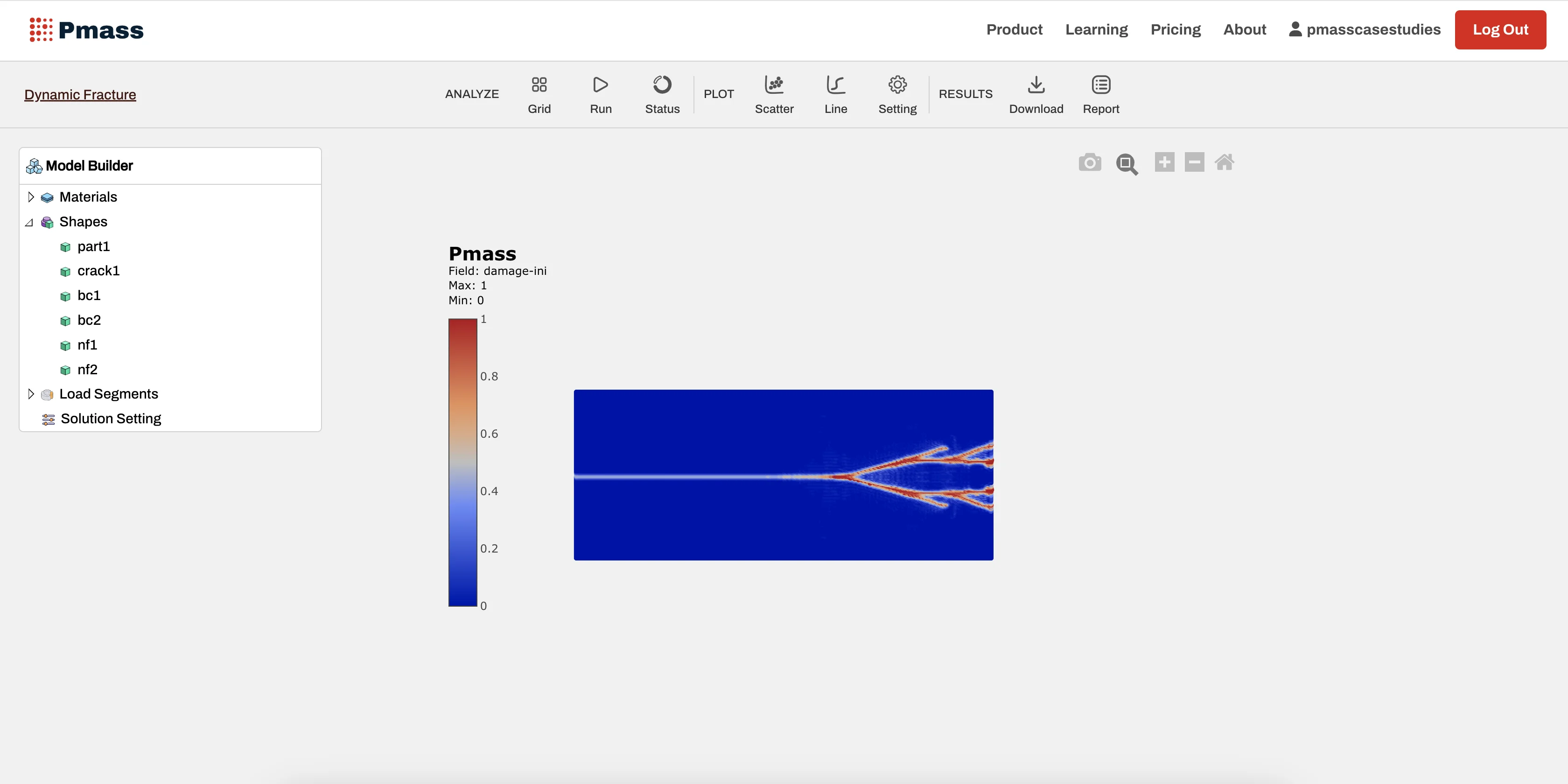
Hybrid Loading
To balance computational efficiency and physical realism, Pmass provides a hybrid loading option that combines quasi-static and transient phases. This allows users to pre-load structures up to near-failure using a quasi-static solver, followed by a transient phase to capture dynamic failure or post-critical behavior. It’s an effective strategy for simulating processes like drop tests on pre-stressed structures or post-buckling response under sudden loading.
Validation Cases